“A healer does not heal you. A healer is someone who holds space for you while you awaken your inner healer, so that you may heal yourself.”
– MARYAM NASNAA
Over the last decade, psychotherapy has come to align itself more strongly with the notion of energy healing (Mollon, 2008). This course supports students’ development through embodied exploration of subtle energies, discovering how to perceive and activate energy for therapeutic use, and learning to direct energy for self-healing and for relational work with others.
- This is the first year of a two-year training in Energy Therapy leading to Complementary & Natural Healthcare Council (CNHC) accreditation.
- The course is in-person only and comprises eight weekends and a three-day retreat, equal to 19 days or 120 contact hours.
- The first year can be taken as a stand-alone Diploma if desired, while the second year Advanced Diploma builds on these foundations and provides the student with a route to accreditation.
- The Course Director is Marcus Sorensen.
Programme dates 2023
Weekend 1: Saturday 4 to Sunday 5 March 2023
Weekend 2: Saturday 1 to Sunday 2 April 2023
Weekend 3: Saturday 6 to Sunday 7 May 2023
Retreat: Friday 2 to Sunday 4 June 2023
Weekend 4: Saturday 1 to Sunday 2 July 2023
Weekend 5: Saturday 9 to Sunday 10 September 2023
Weekend 6: Saturday 7 to Sunday 8 October 2023
Weekend 7: Saturday 11 to Sunday 12 November 2023
Weekend 8: Saturday 9 to Sunday 10 December 2023
Each training day runs from 10am to 5pm, with a one-hour break for lunch and shorter breaks in the morning and afternoon.
Modules
WEEKEND 1: Ways of Sensing Energy and Modes of Energy Usage
- Meeting the group and gathering pre-existing knowledge and experiences of energy therapy and healing forms: energy therapy is an ancient modality with different nomenclatures and approaches. There is no universal “right” way – one emerges from the individual after exploring one or more frameworks
- Defining the epistemological approach of the training:
Shu Ha Ri: Japanese concept for acquiring mastery: learn the form, push the boundaries, transcend the model entirely
Build up own experiential repertoire of perception, interpretation and application to form personal paradigm for healing. - Discussing modalities of sensing: haptic, intuitive, emotional, visual, auditory (rarely: gustatory and olfactory)
- Exercises in energy sensing, self-activation, and basic forms of energy usage: sense & flow
- Set homework for Retreat: in pairs / triads, identify and present a chosen Healer Archetype (e.g. wounded healer; shaman; priest/ess; doctor/nurse; spiritual medium; caregiver; warrior, etc.)
WEEKEND 2: Meeting the Inner Healer and the Other
- Identifying and removing blocks to one’s own Inner Healer
- What is an Inner Healer? (homeostasis, hope, empathy, and sensitivity to suffering, etc.)
- How and why do we compromise or reduce the connection to our Inner Healer? (we fear our own light, we don’t want to fail, we want to be acceptable like others, we have disconnected from our own goodness, we fear the healer shadow, etc.)
- Discussing energy therapy ethics: requirement for high personal integrity and honesty to avoid imagination overriding externally verified perception
- Exercises in energy hygiene, different energy usage: pause, pump, pull
- Exercise in energy healing
WEEKEND 3: Boundaries & Dynamic Energy Responses
- Exploring right use of touch and addressing “love as healing”: it is not based on sexual transference and does not condone touch, incl. hugging, without permission
- Discovering our personal energy response tendencies: withdrawing, merging, blocking, etc.
- Exercise on the approach to the client
- Exercise in energy healing
RETREAT: Creativity in Energy Therapy
- Group presentations on Healer Archetypes
- Exploring how creativity encourages and enhances the flow of energy (life force)
- Incorporating a sense of fun and adventure into the unknown when providing energy therapy
- Exploring the use of divination practices as a tool of discovery beyond realm of conscious self
- Creation of personal divination set made of natural and scavenged items
- Exercises in unstructured creation (Shu Ha Ri revisited)
- Exercises in a range of divination practices
- Exercises in playful energy therapy
WEEKEND 4: Refining Pattern Recognition
- Neuroscience of interoception: embodied emotion and cognition
- Neuroscience of pattern recognition: deciphering what was previously white noise, and associating signals with meaning that can be put to use in energy therapy
- Discussing what equipment, paraphernalia, or other external setting, if any, feels helpful to support energy therapy
- Exercise in balancing different aspects and functions of the brain
- Exercise in self-healing
- Set homework for Weekend 8: in triads, identify and present an Energy Healing System (e.g. Theta healing, Sound healing, Healing Touch, Shamanic healing, Spiritual healing, etc.) which must include an overview of the origins of the practice, the framework used (e.g. cosmic pillars, four dimensions, nadis, five elements) and a sample of typical interventions
WEEKEND 5: Blending the Inner Healer into Professional Life
- Discussing how the learning so far can be applied in professional life, and what else would be useful to incorporate
- Exercise in enlivened presence in talking therapy
- Exercise in standing energy healing
- Exercise in being the blessing (similar to Jewish Tikkun practice)
WEEKEND 6: Practical Approaches to Energy Therapy (Psychotherapy)
- Exploring specific client presentations in which energy therapy could be supportive, such as anxiety, depression, OCD, ADHD, PTSD, borderline, etc.
- Exercises in appropriate energy modes and boundary settings
WEEKEND 7: Practical Approaches to Energy Therapy (Physical Issues)
- Discussing how many physical issues may be related to underlying emotional ones, and exploring specific client presentations that energy therapy could be used for:
- auto-immune conditions (eczema, allergies)
- endocrine dysregulation (adrenal fatigue, menstrual issues)
- reproductive or sexual problems (ED, vaginismus, fertility)
- other specific conditions as suggested by students
- Exercises in appropriate energy modes and boundary settings
WEEKEND 8: Working with Allied Professions
- Group presentations on Energy Healing Systems
- Interfacing with other physical and psychological healthcare professionals and institutions
- Energy therapy in hospitals and hospices in the UK
- Worldwide examples of tribal or holistic healers incorporated into healthcare systems (Aboriginal healers in Australia, etc.)
- Exploring how to make space for holism: medicine / psychotherapy working together with holistic approaches that include energy therapy
- Pushing the boundaries: providing energy fieldwork for gene-tech companies, businesses, etc.
- Exercise in providing explanation of energy therapy
- Exercise in being part of a multidisciplinary team
- Exercise in delivering energy therapy in a clinical or hospital setting
- GRADUATION

Entry Requirements
Applications are invited from counsellors, therapists, psychologists, mental health professionals, social workers, medical professionals with a holistic approach, coaches, and spiritual advisers. We expect you to have secure grounding in the principles of therapy, including self-reflection and working with transference, as during the training you will hold talking therapy-style practice sessions with your peers, where subtle energy approaches are introduced and explored.
Therefore, you need to be comfortable with:
- holding a session with a client with a view to facilitating exploration of and work on a presenting issue (e.g. emotional, physical, cognitive, or spiritual)
- understanding ethics involved with holding a position of power vis-a-vis a client
- staying aware of transference / countertransference and projection that may arise and using self-reflection to work effectively with this
- undertaking personal therapy or extra supervision, if recommended by the teacher, to support any personal issues that are brought about by the training’s depth and breadth and to ensure suitable progress with the skills
This training will give you an additional skill set, allowing for energy therapy to be used to complement your existing practice or as a standalone modality.
Locations
Weekend trainings will be held at:
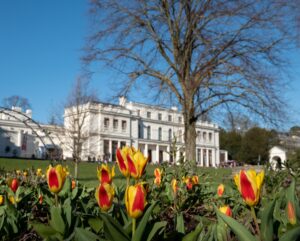
Gunnersbury Park
Popes Lane
London W3 8LQ
View more on visitgunnersbury.org >
The light-filled classroom is on the first floor of this period building with views across the park. Access via a lift is available. Parking is available and charged at a low daily rate on the grounds. Tea, coffee and biscuits are provided at breaks, and participants are requested to bring their own tumblers / bottles to refill. A limited section of food can be purchased on site at the participants’ own cost, and a wider choice from shops 5-10 minutes’ walk away.
The Summer Retreat will be held at:
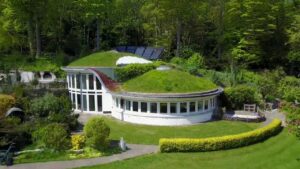
Pines Calyx
Beach Road
St Margaret’s Bay (near Dover)
Kent CT15 6DZ
View more at www.baytrust.org.uk/pines-calyx-eco-venue/ >
We have use of the upper and lower roundels and the full grounds for exploration, spiritual journeying, healing and relaxation. A high quality two-course buffet lunch is included on all three days (all dietary needs are catered for), as well as tea, coffee and biscuits in the morning and afternoon. Dinner and accommodation is at the participants’ own cost and discretion.
Fees
The cost for the eight weekends and summer retreat is £2,500 in total.
This can be paid in one lump sum, or in monthly instalments. A non-refundable deposit of £200 is payable on acceptance of a place on the programme, plus 10 instalments of £230 a month starting in the first month of the training.
A limited number of bursaries are available. When asking for a bursary, please explain the reasons in your application.
In addition to your course fees, you will need to pay for travel, accommodation, any extra food and drink outside of that provided by us, and optional books and educational materials. A portable massage / healing couch is also recommended for those who wish to pursue hands-on energy therapy work. These cost in the range of £150-£350 depending on whether they are bought first-hand or used. Telescopic legs on the couch are recommended, but arm rests and a fold-up back are not required.
Assessment
A Level 5 Diploma in Energy Therapy will be awarded to students who:
Actively participate in class, measured against a list of competencies
Successfully complete two research and presentation tasks in small groups (2 to 4 students per group)
Demonstrate energy therapy skills acquired, evaluated in a 30-minute treatment session
Application
Thank you for your interest in this training. Please send any questions directly to the Course Director, Marcus Sorensen, at: marcusbs@gmail.com or via text at 0794 125 4035.
Please note that the training presents an opportunity for hands-on energy therapy work, which can involve fully clothed physical contact with other students in class. Your permission will be sought, and you may ask for it to stop at any time. You will never be asked to work alone with another person without other people present.
Applicants are required to complete the application form. This will be followed by a video or telephone interview for applicants who meet the necessary criteria as outlined in Entry Requirements above.